reICEcle: Point-Based Ice Pack Recycling Mobile Application
Role: UX Research, UX/UI Design
Motivation
During the COVID-19 pandemic, the rapid growth of home delivery services led to a sharp increase in the use of ice packs for refrigerated and frozen goods. Many households accumulated unused ice packs that were difficult to dispose of responsibly. Due to their superabsorbent polymer content—a form of microplastic—ice packs are rarely accepted in standard recycling systems and often end up as environmentally harmful waste.
Existing recycling efforts, such as temporary municipal collection events, lacked continuity and accessibility. Using the 5 Whys framework, our team identified a deeper issue: while people were willing to recycle, they lacked a convenient and motivating system to do so consistently.
This insight led us to explore how a digital service could lower participation barriers while aligning environmental action with local economic support during the pandemic.
Goal
- Understand household attitudes and barriers toward recycling ice packs
- Identify incentive structures that can motivate repeated participation in recycling
- Translate behavioral insights into a service design that lowers effort and increases engagement
Methodology
To achieve these goals, we conducted a user survey (N=42) to understand household recycling behaviors, perceived effort, and motivation factors.
The survey focused on:
- How used ice packs are stored at home and the space burden they create
- Current disposal methods and awareness of existing ice pack collection or recycling systems, including reasons for use or non-use
- User preferences for incentive structures that could motivate participation in recycling
Insight
- Ice packs are perceived as inconvenient waste, but users delay disposal due to uncertainty rather than unwillingness.
- The primary barrier is not environmental apathy, but high perceived effort and poor integration into everyday life.
- Users are highly receptive to recycling when effort is rewarded transparently and tied to tangible benefits.
Design Response
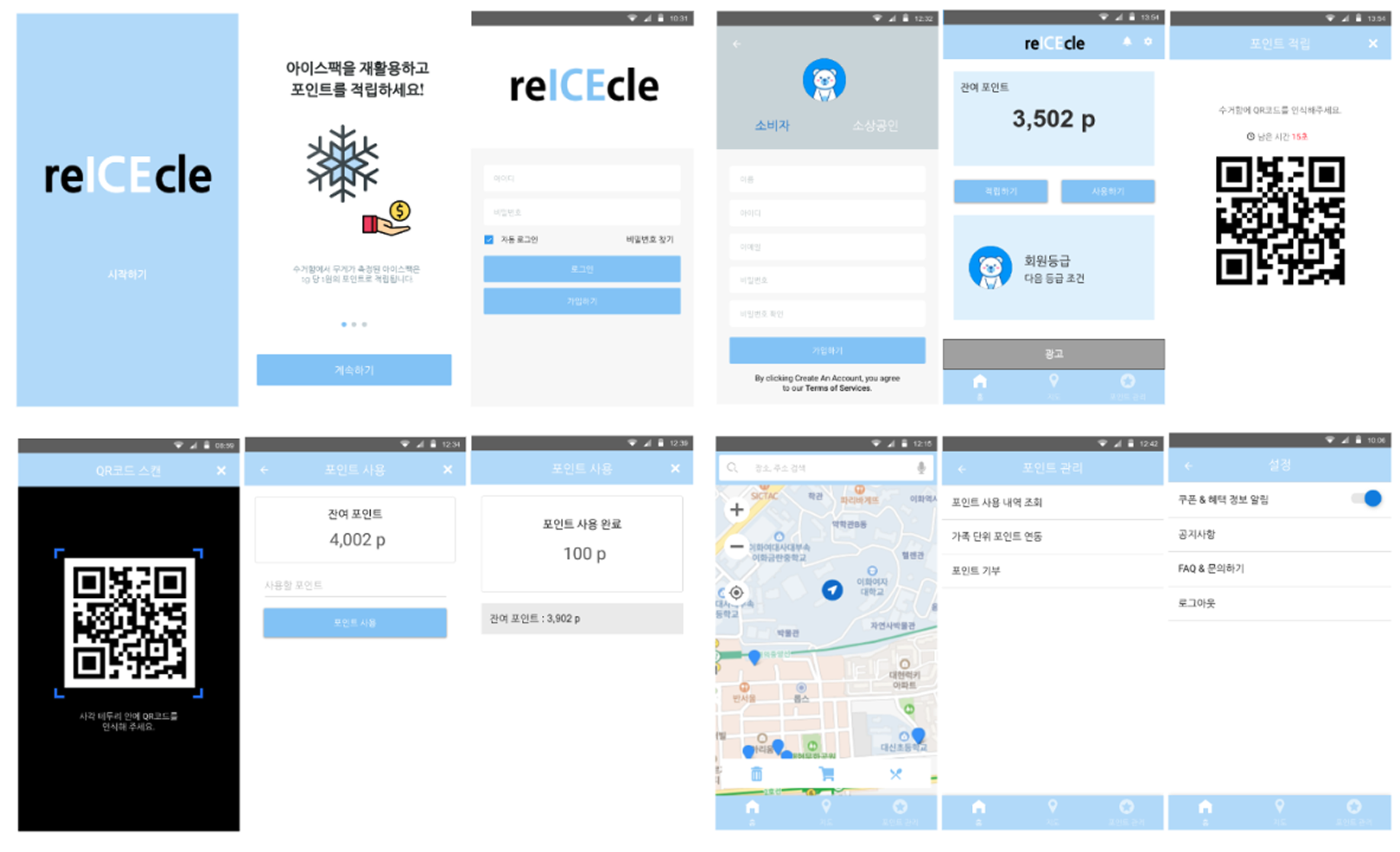 Based on these insights, we designed ReICEcle, a mobile application prototype that connects physical recycling actions with digital rewards.
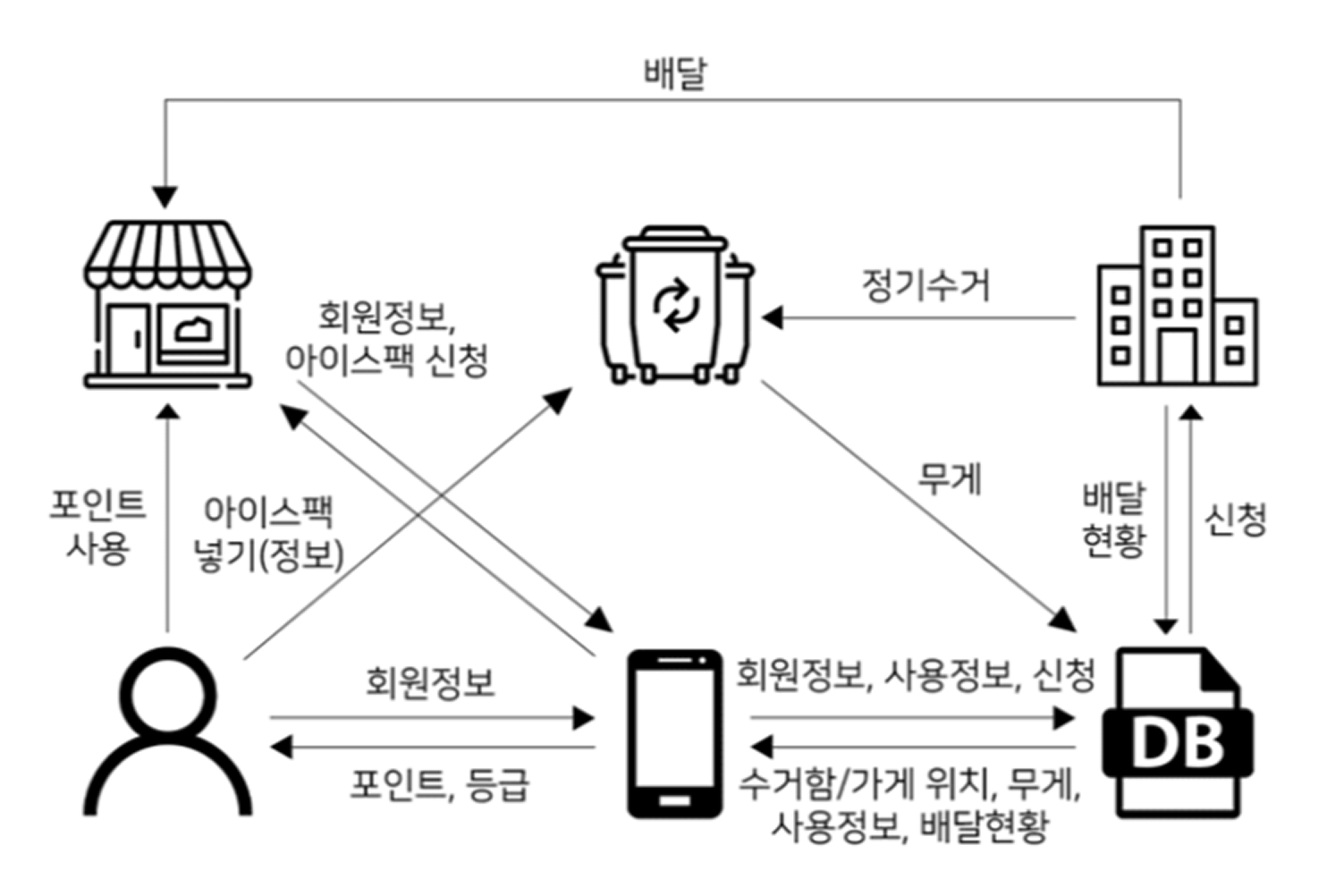
The service integrates:
- A physical collection bin with weight measurement
- A point-based system that tracks individual contributions
- Reward redemption at local businesses impacted by COVID-19
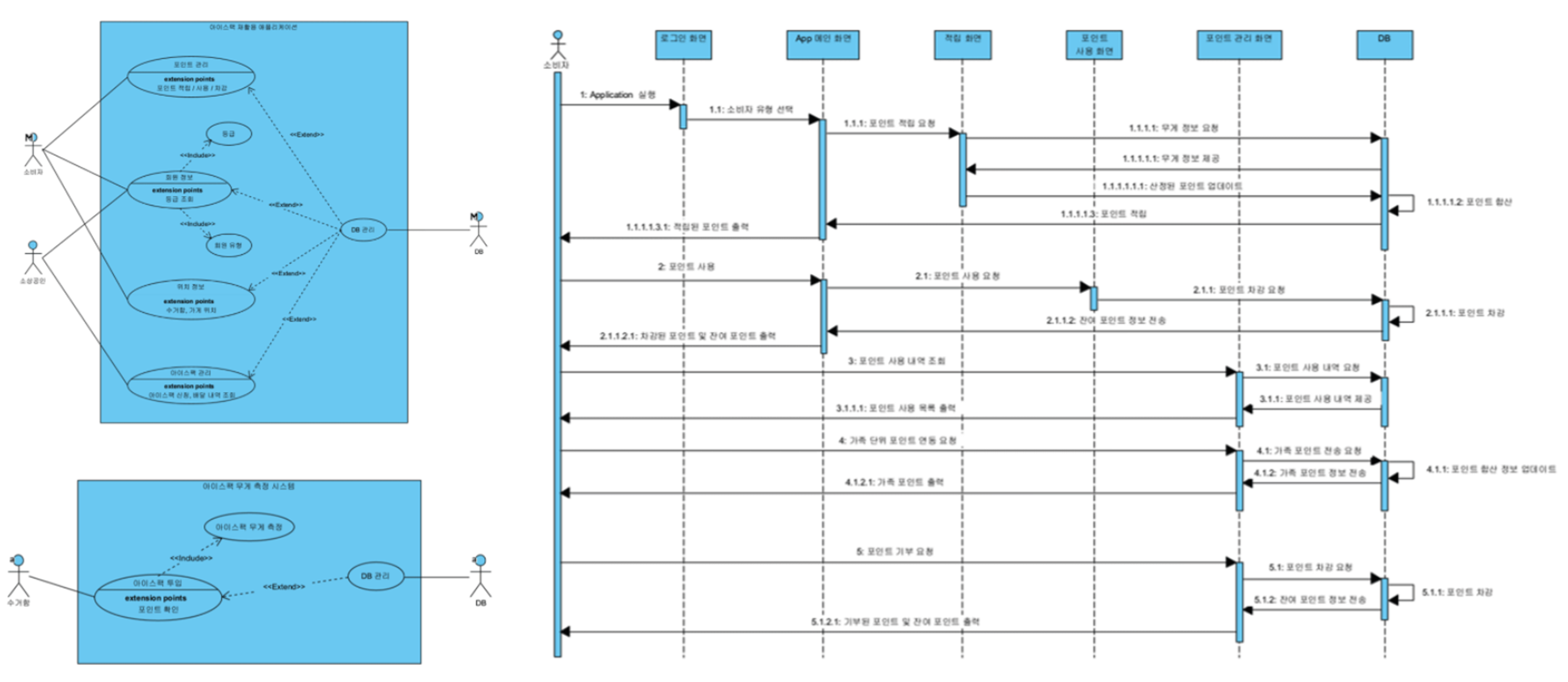
The design process combined UX research, service design, and software engineering methodologies (e.g. UML modeling) to translate user needs into a coherent end-to-end system.
Outcome
- Designed a service concept that links environmental responsibility with local economic recovery through digital incentives
- Delivered a complete mobile app prototype and system flow integrating physical and digital touchpoints
- Recognized as Best Project of the Course
Reflection
This project marked my first experience translating insights from user research into a concrete service design. It helped me understand how behavioral insights can inform system-level decisions, and how UX design can motivate sustainable action by aligning user effort with meaningful rewards.