
A Voice Assistant for Older Adults Using Contactless Services
Role: UX Research, UX/UI Design
Motivation
Digital ordering kiosks are designed for speed and efficiency, often based on interaction patterns familiar to younger users. However, as contactless services become ubiquitous, these assumptions create unequal experiences across age groups.
Rather than focusing exclusively on older adults from the outset, we aimed to identify and clearly articulate the experiential gap between younger and older users. Understanding this contrast allowed us to pinpoint where and why digital exclusion emerges.
Goal
- Identify differences in how adults across age groups experience contactless services
- Understand the key barriers older adults face when using contactless services
- Explore how alternative interaction methods could reduce cognitive and emotional friction for older users
Methodology
We conducted a quantitative survey (N=28), with participants who had prior experience using contactless services.
Why a survey?
- To compare perceptions and experiences across age groups
- To identify statistically meaningful differences in usability and emotional response
- To ground early design direction in evidence rather than assumptions
Participants
- Adults aged 20+
- Experience using contactless services (e.g. kiosks)
- Representing a range of digital familiarity levels
Insight
Comparative analysis revealed gaps in contactless service experiences.
- Younger users were more likely to perceive contactless services as efficient, convenient, and socially comfortable.
- Older users reported greater difficulty related to:
- Inconsistent interaction patterns across devices
- Poor readability and unclear UI hierarchy
- Insufficient system guidance
- Additional setup steps such as registration or app installation
- Emotional pressure, such as awareness of people waiting behind them, was similar between the two groups.
Design Response
Based on the research insights, we explored a voice-first interaction model to reduce reliance on visual navigation and prior digital knowledge. Voice interaction was chosen to lower learning cost and support users who experience difficulty with complex touch interfaces.
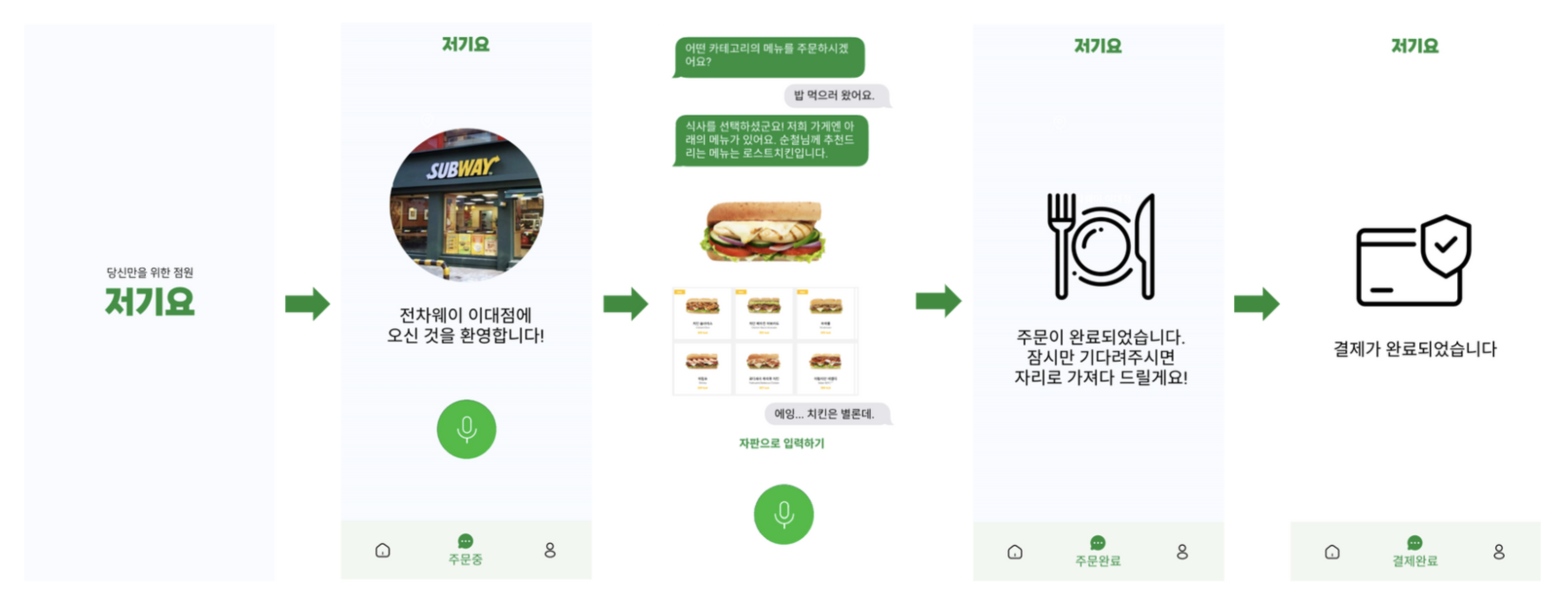
We designed a VUI system that guides users through the ordering process using clear, step-by-step conversational prompts, reducing cognitive load and uncertainty.
Design Principles
- Guided voice interaction to minimize cognitive load
- Clear conversational flow to build confidence
- Fallback options (simplified touch navigation, optional typing)
- Accessibility-first pacing and error tolerance
User flows and interface screens were designed in Figma using an AI assistant metaphor, enabling users to order naturally as if speaking with a clerk. The full journey—from store entry to payment—was visualized to ensure clarity and continuity.
Design Evaluation Criteria
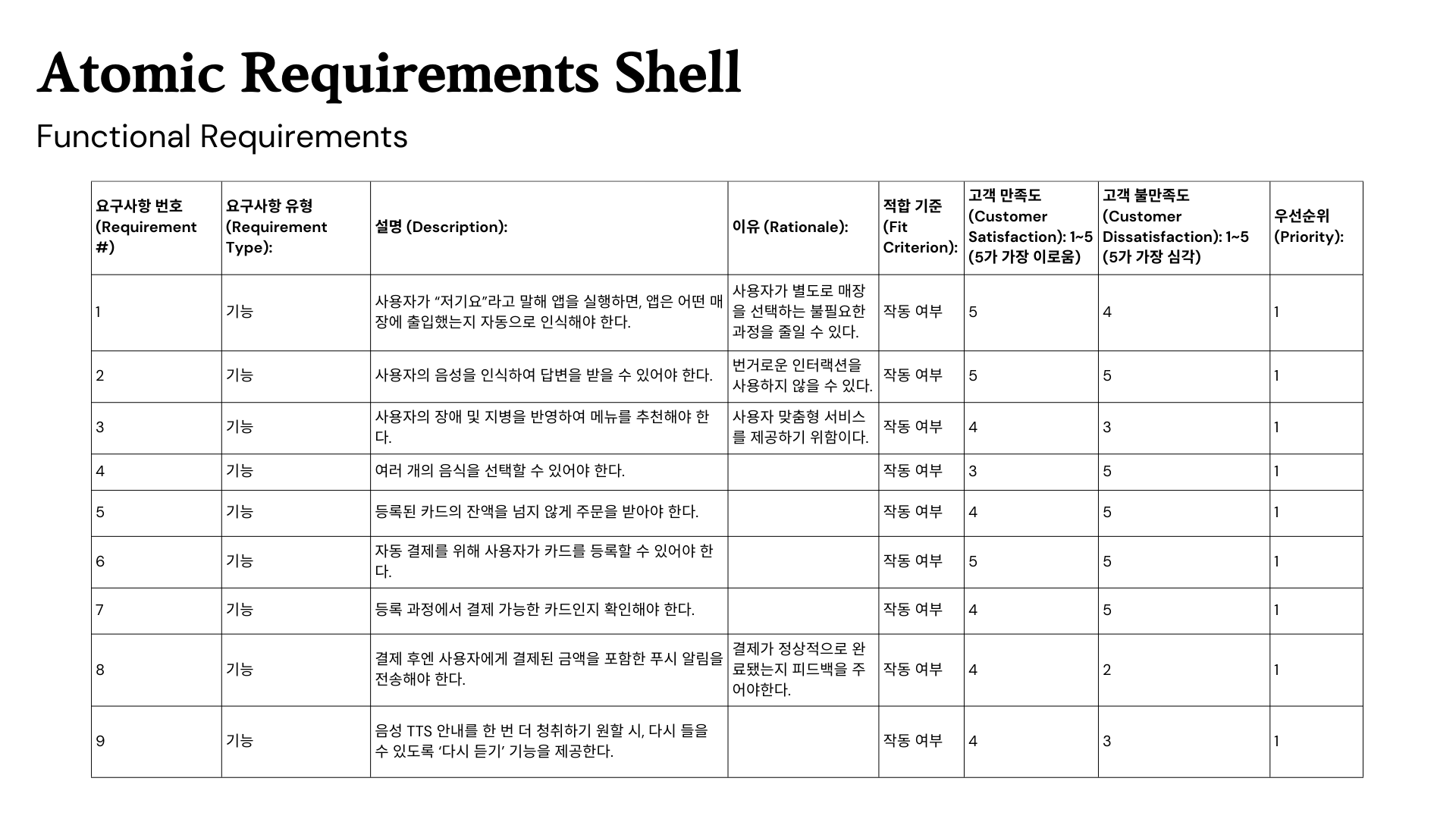
To assess user experience, we also developed a design evaluation criteria.

Reflection
This project deepened my understanding of how comparative research can uncover systemic exclusion. Rather than treating older users as outliers, the research reframed exclusion as a consequence of age-biased design assumptions embedded in digital systems.
If extended further, I would:
- Conduct qualitative follow-up studies to explore underlying motivations and emotional responses
- Run moderated usability testing with older adults
- Measure task success rates alongside emotional indicators such as confidence and stress